For family entertainment centers and commercial indoor play venues, a climbing wall is not simply an additional attraction. It is a vertical activity feature that can improve space utilization, strengthen physical play value, and create a more complete visitor experience.
Many indoor venues focus heavily on floor-based attractions such as slides, ball pits, trampolines, soft play areas, and obstacle routes. A climbing wall adds another movement dimension by using vertical space effectively. It encourages children to climb, balance, plan, and challenge themselves while giving the venue a stronger visual focal point.
When integrated with indoor playground equipment, ninja challenges, soft play zones, or trampoline areas, a climbing wall can support better activity zoning, longer play engagement, and stronger commercial differentiation for family entertainment center projects.
Why Climbing Walls Matter in Commercial Venue Planning
A well-designed climbing wall adds more than entertainment value. It helps operators build a more balanced activity system inside the venue.
In a commercial indoor play project, every functional area should serve a clear purpose. Some zones attract younger children, some support high-energy movement, and some help parents stay longer by giving children more reasons to continue playing. A climbing wall can connect these needs by offering physical challenge, visual appeal, and repeat-play potential.
For operators, this means the climbing wall should not be treated as an isolated decoration. It should be planned as part of the overall movement route, visitor flow, safety layout, and activity mix.
Benefits of Adding a Climbing Wall
Physical Development and Active Play Value
Climbing uses the arms, legs, core, hands, and feet together. Children need to pull, push, step, stretch, grip, balance, and control their body while moving from one hold to another.
This full-body movement helps develop strength, coordination, flexibility, balance, and body awareness. Compared with passive attractions, climbing encourages children to stay active in a more focused and purposeful way.
For a family entertainment center, this is valuable because active play features often extend dwell time. A climbing wall can become part of a broader play route that includes climbing, crawling, sliding, balancing, and obstacle challenges. For example, a layout that combines climbing with commercial indoor playground equipment with obstacle routes can create a more layered activity experience.
Cognitive and Confidence-Building Value
A climbing wall is also a decision-making activity. Children need to observe the route, judge distance, choose handholds and footholds, and adjust their movement when a route becomes difficult.
This process supports focus, problem-solving, patience, and confidence. Instead of simply running through a play area, children learn to plan, test, correct, and try again.
For operators targeting families, this adds educational and developmental value to the venue. Parents often appreciate attractions that are not only fun, but also help children build confidence and physical control through structured challenge.
Social Interaction and Group Activity Value
Climbing naturally creates social interaction. Children watch each other, offer encouragement, share routes, and celebrate small achievements.
This makes climbing walls useful for birthday parties, school visits, group activities, parent-child programs, and activity center events. The attraction can support both individual challenge and group participation.
For commercial operation, this matters because group-friendly attractions can increase programming opportunities. A climbing wall can become part of event packages, class-style activities, or supervised challenge sessions.
Types of Climbing Walls for Family Entertainment Centers
Different climbing wall styles serve different venue goals. The right choice depends on target age group, ceiling height, available floor area, safety management, theme design, and expected visitor capacity.
Bouldering Walls
Bouldering walls are lower climbing walls that usually do not require ropes. They are suitable for venues that want compact climbing value without building a tall climbing structure.
Because users stay closer to the ground, impact-absorbing flooring and clear fall zones are essential. Bouldering walls work well in children’s activity centers, indoor playgrounds, and mixed active-play zones where children can complete short climbing challenges repeatedly.
Fun Climbing Walls
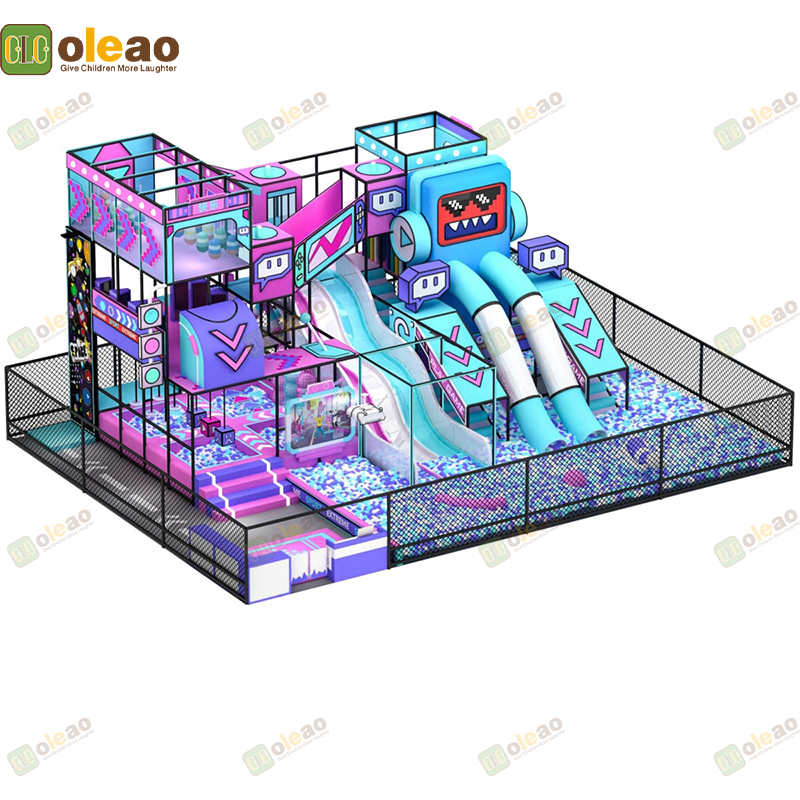
Fun climbing walls use colorful designs, themed panels, creative shapes, and larger holds to make climbing more approachable for younger children.
This type is suitable for family entertainment centers that want an attraction with strong visual appeal. It can match themes such as jungle, ocean, candy, space, city adventure, or cartoon-style play.
For venues focused on families with younger children, fun climbing walls can reduce the pressure of “sports climbing” and turn the activity into a playful challenge.
Cloud and Fantasy-Themed Climbing Walls
Cloud-style or fantasy-themed climbing walls usually use soft visual forms, rounded shapes, gentle colors, and child-friendly holds.
They work well beside toddler zones, soft play areas, or lower-intensity activity spaces. For operators who want the venue to feel warm, safe, and imaginative, this style can strengthen the emotional appeal of the play environment.
Integrated Challenge Walls
Some venues need climbing walls that connect with obstacle routes, rope elements, ninja challenges, or adventure zones. This creates a more complete activity system instead of a standalone feature.
For older children, an integrated climbing wall can connect naturally with commercial ninja course equipment, balance routes, hanging obstacles, or soft landing areas. This type of design improves challenge value and gives children more reasons to repeat the route.
Choosing the Right Climbing Wall for Your Venue
A climbing wall should not be selected only by appearance. Operators need to evaluate whether it fits the venue’s customer profile, space conditions, operating model, safety requirements, and long-term maintenance plan.
Space and Size Requirements
Before choosing a climbing wall, operators should review ceiling height, floor area, nearby traffic flow, waiting space, parent viewing angles, and emergency access.
A tall wall may create a stronger visual impact, but it also requires more structural planning, supervision, and safety equipment. For smaller venues, a lower bouldering wall or themed fun wall may be more practical. For larger FEC projects, a feature climbing wall or integrated adventure route can become a strong visual anchor.
The wall should not block main pathways or create crowding near entrances, exits, seating areas, or high-traffic play zones. Enough clearance should be reserved for padding, queuing, staff supervision, and safe movement.
Material and Durability Considerations
Commercial climbing walls must handle frequent use. Wall panels, climbing holds, frames, padding, and connection points should be selected based on durability, grip quality, safety, and maintenance access.
Common material choices may include wood-based panels, fiberglass surfaces, molded panels, resin holds, steel frames, and soft protective materials. The right option depends on venue size, design style, age group, budget, and expected daily traffic.
For B2B projects, durability should be evaluated together with maintenance convenience. A wall that looks attractive but is difficult to inspect or repair may create operational problems later.
Design and Visual Integration
A climbing wall can become one of the main visual features inside a family entertainment center. It can use natural rock textures, themed graphics, LED details, brand colors, or character-based visuals.
However, visual design should support the activity, not weaken safety or usability. Holds should remain easy to identify, routes should be readable, and supervision should not be blocked by decorative structures.
Early 3D layout planning can help operators review how the climbing wall fits with other attractions, parent seating, sightlines, visitor flow, and safety zones before production begins.
Installation and Safety Considerations
A climbing wall must be planned with safety from the beginning. Structure, height, surface, padding, user age, supervision, and maintenance should all be considered before installation.
Professional Installation
Commercial climbing walls should be installed according to structural requirements and project drawings. Anchoring, load-bearing capacity, panel connection, wall angle, and hold placement all affect safety.
For customized indoor play projects, installation should follow clear technical guidance. A reliable production process also supports better consistency in materials, workmanship, and structural preparation.
Safety Measures and Operating Rules
Safety planning should include impact-absorbing flooring, suitable wall height, stable holds, controlled access, visible supervision points, and clear visitor rules.
For taller climbing walls, harness systems or auto-belay devices may be required depending on the design and local requirements. For younger children, lower routes, larger holds, simple paths, and closer adult supervision are usually more appropriate.
Operators should also set clear rules for age limits, waiting order, climbing direction, allowed behavior, and restricted actions. These rules should be visible to both children and parents.
Regular Inspection and Maintenance
Climbing walls require routine inspection. Operators should check holds, panels, padding, anchors, flooring, fasteners, and any mechanical safety systems if used.
Loose holds, worn surfaces, cracked panels, damaged padding, or unstable structures should be repaired before the attraction reopens. Keeping inspection and maintenance records helps operators manage safety more professionally and reduce long-term risk.
Enhancing Venue Operation with Climbing Walls
A climbing wall works best when it is connected to the overall venue experience. If placed in an isolated corner without clear flow, its value may be limited. If integrated into the activity route, it can improve both play experience and operational efficiency.
Creating a Multi-Functional Activity Zone
A climbing wall can be placed near obstacle courses, slides, soft play areas, trampoline zones, or parent viewing areas. This creates a more dynamic play environment and gives children multiple ways to move through the venue.
Younger children may start with simple climbing and soft play, while older children may move toward ninja-style obstacles or more challenging climbing routes. This layered design supports mixed-age participation without making the venue feel disconnected.
Connecting Climbing with Other Attractions
Climbing walls can work well with several commercial indoor play features:
Indoor playground structures: Add vertical movement and physical challenge.
Ninja course zones: Create stronger obstacle-based activity routes.
Trampoline areas: Combine jumping, climbing, balancing, and agility.
Party rooms: Provide a clear highlight activity for birthday groups.
Parent seating areas: Improve visibility while children remain active.
This type of connection helps operators create a more complete visitor journey instead of relying on separate attractions that do not support each other.
Customizing the Climbing Experience
One operational advantage of climbing walls is that routes can be adjusted. Holds can be changed, colors can mark difficulty levels, and themed designs can be updated to match the venue concept.
For younger children, larger holds, lower routes, and playful shapes are usually more suitable. For older children, angled panels, mixed hold types, and route goals can create stronger challenge value.
A good climbing wall should give children a reason to come back, improve their skills, and try a new route next time.
Cost and Investment Considerations
A climbing wall is a project investment, not only a decoration cost. Operators should evaluate both the initial budget and the long-term value it can bring to the venue.
Budget Planning
The budget may vary depending on wall size, height, structure, materials, theme design, safety equipment, installation complexity, and whether the wall is standalone or integrated with other attractions.
Operators should consider:
Design and customization
Structural preparation
Wall panels and climbing holds
Padding and safety flooring
Installation support
Staff supervision needs
Inspection and maintenance costs
Planning these items early helps avoid later changes that may affect safety, layout efficiency, or project budget.
Long-Term Commercial Value
A climbing wall can improve venue value in several ways. It adds active play, increases attraction variety, supports group activities, and creates a visible challenge that children can repeat.
For family entertainment centers, this repeatability is important. A venue with only passive or one-time attractions may lose freshness quickly. A climbing wall allows children to improve, try harder routes, and build confidence over time.
Differentiation in the Indoor Entertainment Market
In competitive indoor entertainment markets, operators need attractions that are visually recognizable and functionally meaningful. A well-designed climbing wall can become a feature that parents remember and children talk about.
It can also support birthday parties, school visits, team activities, family challenges, and indoor fitness-style programs. This makes the climbing wall valuable not only as equipment, but also as part of the venue’s operating strategy.
FAQ
What is a climbing wall in a family entertainment center?
A climbing wall is a constructed activity wall with handholds and footholds. In commercial indoor play venues, it supports climbing, balance, strength, coordination, challenge-based play, and visual attraction value.
Why should a family entertainment center add a climbing wall?
A climbing wall adds vertical activity value, improves attraction variety, supports active play, and creates a stronger challenge experience for children. It can also help extend playtime and improve venue differentiation.
What are the benefits of climbing walls for children?
Climbing walls can help children develop strength, balance, coordination, confidence, focus, problem-solving ability, and body control through active movement.
How should operators choose the right climbing wall?
Operators should consider user age, ceiling height, available floor area, supervision needs, safety requirements, visual theme, maintenance access, and how the wall connects with other attractions.
What safety measures are important?
Important safety measures include stable structure, proper padding, impact-absorbing flooring, suitable wall height, safe holds, clear rules, staff supervision, and regular inspection.
Commercial Planning Notes
A climbing wall can strengthen a family entertainment center when it is planned as part of the venue’s activity system, not treated as a standalone feature. Its value depends on where it is placed, which age group it serves, how it connects with other attractions, and whether the safety and maintenance plan is realistic.
For smaller indoor play venues, a lower themed climbing wall may add active play value without taking too much space. For larger FEC projects, a more visible climbing feature connected with ninja routes or obstacle zones can support stronger activity flow and repeat participation.
The best result comes from matching the climbing wall to the venue’s commercial purpose: visitor engagement, space efficiency, safety control, and long-term operating value. For more commercial indoor play planning ideas and equipment solutions, visit Aoleao.


 English
 العربية
 Français
 Русский
 Español
 Português
 Deutsch
 italiano
 日本語
日本語 한국어
한국어 Nederlands
 Tiếng Việt
 ไทย
ไทย Polski
 Türkçe
 አማርኛ
አማርኛ ພາສາລາວ
 ភាសាខ្មែរ
 Bahasa Melayu
 ဗမာစာ
ဗမာစာ தமிழ்
தமிழ் Filipino
 Bahasa Indonesia
 magyar
 Română
 Čeština
 Монгол
 қазақ
қазақ Српски
 हिन्दी
 فارسی
فارسی Kiswahili
 Slovenčina
 Slovenščina
 Norsk
Norsk Svenska
 українська
 Ελληνικά
 Suomi
Suomi Հայերեն
 עברית
עברית Latine
 Dansk
Dansk اردو
اردو Shqip
Shqip বাংলা
বাংলা Hrvatski
 Afrikaans
 Gaeilge
 Eesti keel
 Māori
Māori