Opening a family entertainment center is a major commercial project. The right play equipment does not only fill the space; it shapes the customer experience, affects visitor flow, supports safety management, and influences long-term operating value.
For FEC investors and operators, sourcing custom play equipment should begin long before production. The process should start with a clear concept, target audience, site conditions, budget direction, and business model. From there, the equipment supplier should help turn the concept into a practical layout, a safe play environment, and an attraction mix that supports daily operation.
This guide explains how to source custom play equipment for an FEC business from early concept planning to opening preparation.
1. Understanding Your FEC Concept and Business Positioning
Before selecting equipment, operators need to define what type of family entertainment center they want to build. A clear concept helps determine the activity zones, equipment mix, theme, capacity, and commercial positioning of the venue.
Define Your Target Audience
Different age groups need different types of play equipment. A toddler-focused center may require soft play modules, ball pits, low slides, crawl tunnels, and parent-child activity zones. A venue targeting older children may need climbing routes, ninja challenges, trampoline elements, sports zones, and multi-level play structures.
For a broader FEC project, the layout should usually serve multiple age groups while keeping zones clearly separated. Younger children need softer, lower, and more visible areas. Older children need stronger challenge, movement variety, and repeat-play routes.
This age-group planning affects not only equipment selection, but also ticketing, staff supervision, party packages, and daily operating flow.
Clarify the Venue Theme
A strong theme can make an FEC more memorable. Jungle adventure, space exploration, ocean world, city role-play, candy land, forest treehouse, or futuristic sports themes can all influence equipment design and visitor experience.
The theme should not be treated as decoration only. It should guide the color system, play routes, facade design, photo points, and activity zoning. A well-planned theme helps the venue feel complete and easier to promote.
For example, a project based on commercial kids play centre equipment with ball pit activity zones may combine slides, ball pit play, climbing elements, and open activity areas into one family-friendly commercial layout.
Match the Concept with the Business Model
A successful FEC should connect play design with revenue planning. Operators should consider whether the venue will focus on daily ticketing, birthday parties, memberships, school visits, parent-child programs, food and beverage support, or event-based operation.
These business choices affect the equipment plan. A birthday-focused FEC may need party rooms, group activity zones, and visually strong attractions. A membership-based venue may need more repeatable activities, such as climbing challenges, role-play routes, trampoline zones, or multi-level indoor playground systems.
2. Why Custom Play Equipment Matters for FEC Projects
Custom play equipment gives operators more control over space use, theme consistency, safety planning, and visitor experience. Compared with standard equipment packages, a custom solution can better match the real conditions of the venue.
Better Fit for the Site
Every FEC space is different. Ceiling height, column positions, entrances, fire exits, parent seating, traffic flow, and available floor area all affect the equipment layout.
Custom equipment can be designed around these conditions. Instead of forcing a standard product into the space, the layout can be planned to make better use of difficult corners, vertical height, and irregular floor plans.
For venues with limited space, a compact multi-level structure may be more valuable than scattered single attractions. A product direction such as multi-level indoor playground equipment for compact venues shows how vertical play routes can improve space efficiency in commercial indoor projects.
Stronger Theme and Brand Identity
Custom equipment allows the play environment to reflect the FEC’s own theme and market positioning. The structure, colors, soft play modules, entrance facade, themed graphics, and activity zones can be designed as one complete experience.
This matters because families remember venues that feel distinctive. A well-branded play space is also easier to photograph, share on social media, and promote in local marketing.
Improved Safety and User Flow
A custom layout can also support safer operation. The equipment can be planned with age zones, fall protection, soft landing areas, clear exits, staff viewing points, parent seating, and emergency access.
Safety is not only about the materials used. It is also about how children move through the venue. If high-energy zones, toddler areas, slides, and waiting points are poorly arranged, the venue may become crowded or difficult to supervise.
Professional 3D layout planning helps operators review the equipment structure, visitor flow, supervision points, and safety clearance before production begins.
3. Key Considerations When Sourcing FEC Play Equipment
Sourcing custom play equipment is not only about choosing attractive products. Operators need to evaluate safety, durability, maintenance, play value, and long-term commercial use.
Safety and Compliance Support
Safety should be one of the first considerations. Equipment should use child-safe materials, stable structures, rounded edges, suitable padding, non-slip surfaces, and appropriate barriers.
For international FEC projects, compliance requirements may vary by market. Operators should work with a supplier that understands documentation needs and can provide relevant certification or compliance support according to the project requirements.
Aoleao can support commercial indoor playground projects with international certification and compliance-related documentation based on market and project needs.
Space Optimization
Indoor FEC venues often need to balance many functions within limited space: ticketing, shoe-changing area, play zones, toddler area, party room, parent seating, storage, staff access, and emergency routes.
The equipment layout should maximize play value without making the venue feel crowded. A good plan should organize the space into clear zones:
Toddler play area
Main indoor playground structure
Ball pit and slide zone
Climbing or adventure zone
Trampoline or active play zone
Party or group activity area
Parent viewing area
This zoning helps operators manage visitor flow and improves the user experience for both children and parents.
Maintenance and Cleaning
Equipment that looks attractive but is difficult to maintain can increase long-term operating pressure. Before confirming the design, operators should consider how each zone will be cleaned, inspected, and repaired.
Soft play areas, ball pits, trampoline zones, and climbing features all require different maintenance routines. Materials should be durable, easy to clean, and suitable for frequent commercial use.
A reliable production process also supports better consistency in structure, materials, packing, and installation preparation.
Play Experience and Activity Variety
A successful FEC should offer more than one type of play. Children need different activity levels and reasons to stay engaged.
A strong equipment plan may include:
Soft play for toddlers
Ball pits for sensory and low-intensity play
Multi-level structures for exploration
Slides for high repeat value
Climbing routes for challenge
Trampoline elements for active movement
Ninja or obstacle zones for older children
Role-play or themed areas for imagination
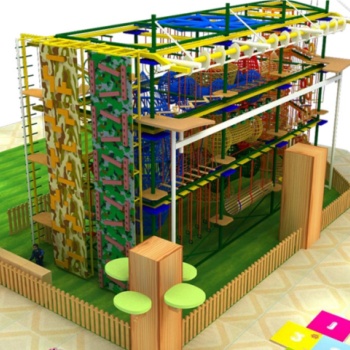
For larger family entertainment centers, a solution such as family entertainment center equipment with soft play and challenge zones can support a more balanced combination of soft play, activity routes, and challenge-based play.
4. Choosing the Right Manufacturer for Custom Play Equipment
The equipment manufacturer plays a major role in the success of an FEC project. A suitable supplier should not only provide products, but also understand project planning, safety, customization, production, installation, and long-term use.
Experience in Commercial FEC Projects
Operators should choose a manufacturer with experience in commercial indoor playgrounds, family entertainment centers, trampoline parks, ninja courses, soft play areas, and themed play spaces.
Experience matters because FEC projects often involve complex layouts, multiple age groups, different attraction types, and strict delivery schedules.
Customization Capability
The supplier should be able to support customized themes, dimensions, colors, activity combinations, structural details, and layout adjustments.
Customization should not only focus on appearance. It should also include practical planning: how children enter and exit each zone, how parents supervise, how staff manage safety, and how the equipment supports the venue’s operating model.
Design, Production, and Installation Support
A reliable manufacturer should provide clear project communication from design to delivery. This includes:
Initial concept discussion
Site size review
3D layout design
Equipment customization
Production coordination
Quality inspection
Packing and shipping preparation
Installation guidance or overseas installation support
After-sales communication
For FEC investors, this kind of project support can reduce communication costs and help the project move forward more smoothly.
5. The Process of Sourcing Custom Play Equipment
A clear sourcing process helps operators avoid confusion, delays, and unnecessary redesigns.
Step 1: Define Requirements
Start by identifying the venue size, ceiling height, target users, budget range, preferred theme, opening timeline, and expected capacity.
Operators should also prepare site drawings, photos, videos, or CAD files if available. These materials help the supplier understand the space more accurately.
Step 2: Select the Equipment Direction
Based on the FEC concept, operators can decide which equipment categories are necessary. For example:
Indoor playground equipment for the main play structure
Soft play equipment for toddlers
Trampoline park equipment for active zones
Ninja course equipment for older children
Ball pits, slides, climbing routes, or sports zones for activity variety
The goal is to build a balanced equipment mix, not simply add as many attractions as possible.
Step 3: Develop the Layout
After the equipment direction is confirmed, the supplier should develop a 3D layout based on the site conditions and business goals.
The layout should show activity zoning, play routes, entrance and exit points, safety spacing, parent viewing areas, and how different zones connect.
This stage is important because it helps operators evaluate the project before production. Adjustments made at the design stage are usually easier and more cost-effective than changes made after manufacturing.
Step 4: Confirm Materials, Structure, and Details
Once the layout is approved, the project should move into technical confirmation. This includes materials, colors, play components, structure, safety features, installation details, packaging, and production schedule.
Operators should review the details carefully to make sure the final equipment matches the approved concept and site requirements.
Step 5: Production, Inspection, and Delivery
During production, the manufacturer should manage component fabrication, quality control, trial fitting when needed, packing, and delivery preparation.
For international projects, good packing and clear labeling are important. They help reduce confusion during unloading and installation.
Step 6: Installation and Opening Preparation
After the equipment arrives, installation should follow the approved drawings and technical guidance. For larger projects, professional staff or an installation team may be arranged depending on the project needs.
Before opening, operators should complete final safety checks, staff training, cleaning routines, rule signage, ticketing setup, and emergency response preparation.
6. Preparing Your FEC for Long-Term Operation
Sourcing the right equipment is only the beginning. Long-term success depends on daily operation, maintenance, marketing, and customer experience.
Regular Maintenance
Operators should build a maintenance schedule from the beginning. Daily checks, weekly inspections, cleaning routines, and repair records help keep the playground safe and professional.
Key areas to monitor include padding, netting, fasteners, slides, trampoline mats, ball pits, soft play surfaces, and high-use activity points.
Updating the Play Experience
Children and families return when the venue feels fresh. Operators can update the experience through seasonal decorations, themed events, party programs, membership activities, new routes, or small add-on play features.
A good custom layout should allow some flexibility for future updates.
Staff Training and Customer Service
Staff play a major role in the FEC experience. They help manage safety rules, guide children, support birthday parties, answer parent questions, and keep the venue organized.
Good equipment creates the foundation, but trained staff and clear operating procedures turn the space into a reliable business.
FAQ
What should I consider when sourcing custom play equipment for an FEC?
Operators should consider target age groups, venue size, ceiling height, theme, safety requirements, activity mix, budget, maintenance needs, and long-term operating goals.
Why is custom play equipment important for an FEC business?
Custom equipment helps match the play structure to the real site conditions, brand theme, visitor flow, and commercial model. It can improve both play experience and operational efficiency.
How can I ensure the equipment is safe?
Work with a manufacturer that supports safety-focused design, quality materials, proper padding, clear layout planning, inspection, and relevant certification or compliance documentation based on project needs.
What should I look for in a play equipment manufacturer?
Look for commercial project experience, customization capability, design support, production reliability, installation guidance, after-sales communication, and understanding of FEC business needs.
How early should I start sourcing equipment before opening?
FEC operators should start early, ideally after the site and business concept are clear. Design, confirmation, production, shipping, installation, and opening preparation all require time.
FEC Planning Notes
Sourcing custom play equipment for an FEC business is not a single purchase decision. It is a project planning process that connects concept, layout, safety, production, installation, and long-term operation.
The best results come from defining the business model first, then matching equipment to the target audience, site conditions, theme, budget, and operating plan. A strong custom play solution should help the venue attract families, manage visitor flow, support repeat visits, and operate safely over time.
For investors and operators preparing a new family entertainment center or indoor playground project, choosing the right equipment partner can make the path from concept to opening more efficient and more reliable. For more commercial indoor playground planning ideas and equipment solutions, visit Aoleao.


 English
 العربية
 Français
 Русский
 Español
 Português
 Deutsch
 italiano
 日本語
日本語 한국어
한국어 Nederlands
 Tiếng Việt
 ไทย
ไทย Polski
 Türkçe
 አማርኛ
አማርኛ ພາສາລາວ
 ភាសាខ្មែរ
 Bahasa Melayu
 ဗမာစာ
ဗမာစာ தமிழ்
தமிழ் Filipino
 Bahasa Indonesia
 magyar
 Română
 Čeština
 Монгол
 қазақ
қазақ Српски
 हिन्दी
 فارسی
فارسی Kiswahili
 Slovenčina
 Slovenščina
 Norsk
Norsk Svenska
 українська
 Ελληνικά
 Suomi
Suomi Հայերեն
 עברית
עברית Latine
 Dansk
Dansk اردو
اردو Shqip
Shqip বাংলা
বাংলা Hrvatski
 Afrikaans
 Gaeilge
 Eesti keel
 Māori
Māori