Indoor playgrounds are no longer only places for children to run, slide, and play. Many successful venues are becoming full family entertainment destinations, where operators need to offer more active, memorable, and repeatable experiences.
A ninja climbing zone can be a strong addition to this type of business model. Inspired by obstacle-course play, it gives children a structured challenge that combines climbing, balancing, hanging, crawling, and problem-solving. For operators, its value is not only in the excitement it creates, but also in how it can support customer engagement, repeat visits, premium activities, and long-term revenue potential.
When planned properly, a ninja course equipment zone can become more than an attraction. It can become a strategic investment inside an indoor playground or family entertainment center.
1. Attracting a Wider Customer Base
A traditional indoor playground may mainly attract younger children. Slides, ball pits, and soft play structures are important, but older children may quickly outgrow them if there are no stronger challenges.
A ninja climbing zone helps expand the audience.
Reaching Older Children and Teens
Ninja-style play is especially attractive to older children, teens, and active families. It gives them a reason to visit a playground that might otherwise feel too young for them.
The zone can include hanging obstacles, climbing walls, balance elements, rope challenges, stepping platforms, and soft landing areas. These features allow children to test strength, agility, balance, and coordination in a controlled environment.
For operators, this wider age appeal is important. A venue that can serve toddlers, school-age children, and older kids has more opportunities to attract family groups with children of different ages.
A product direction such as commercial ninja course equipment can help indoor playgrounds add more challenge-based value for older users.
Supporting Fitness-Oriented Family Entertainment
Parents increasingly look for activities that are not only fun, but also active and healthy. A ninja climbing zone fits this demand because it turns exercise into play.
Children can climb, swing, jump, balance, and move through obstacle routes without feeling like they are doing a formal workout. This helps operators position the venue as a more active and development-focused indoor play destination.
For family entertainment centers, this can improve brand positioning. The venue becomes more than a place to pass time; it becomes a space where children build confidence, coordination, and physical ability through repeated play.
2. Encouraging Repeat Visits
One of the strongest ROI values of a ninja climbing zone is repeatability. A slide or simple play structure may be used in the same way each visit, but a ninja zone gives children a reason to return and improve.
Skill Progression Creates Return Motivation
Children enjoy challenges they can practice and gradually master. A ninja climbing zone allows them to return and try again:
Complete the route faster
Try a more difficult obstacle
Improve balance and grip strength
Compete with friends
Move from beginner routes to advanced routes
This sense of progress is valuable for indoor playground operators. It gives families a stronger reason to come back, especially when children feel proud of their improvement.
Multiple Difficulty Levels Improve Long-Term Use
A well-designed ninja zone should include different difficulty levels. Younger or beginner users need easier obstacles, while older children need more challenging routes.
This tiered design helps the attraction stay relevant over time. Children do not finish the experience in one visit. Instead, they can return, practice, and challenge themselves again.
For operators, this supports membership programs, repeat ticket sales, and regular family visits.
3. Enhancing Customer Experience and Brand Differentiation
In a competitive indoor entertainment market, operators need attractions that make their venue stand out. A ninja climbing zone can become one of the strongest identity features inside the playground.
Creating a More Memorable Venue
Many indoor playgrounds offer similar slides, ball pits, and soft play areas. A ninja climbing zone adds a stronger visual and activity identity.
When designed with clear routes, themed obstacles, soft landing areas, and good spectator visibility, it can become a highlight that children remember and parents talk about.
This is valuable for local marketing. A venue with a unique challenge zone is easier to promote for birthday parties, family visits, school activities, and social media content.
Adding Activity Value Beyond Standard Play
A ninja climbing zone provides a different type of play experience. It is not only free movement; it is goal-based play. Children need to complete obstacles, plan their route, and build confidence through effort.
This makes the customer experience feel more structured and rewarding. Parents often appreciate attractions that combine fun with physical development, problem-solving, and persistence.
When integrated with indoor playground equipment, soft play areas, trampoline elements, or obstacle routes, a ninja zone can help create a more complete indoor playground experience.
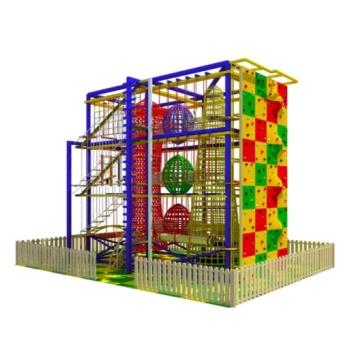
4. Increasing Revenue Opportunities
A ninja climbing zone can support multiple revenue channels when it is planned as part of the venue’s operating model.
Premium Access and Membership Packages
Operators may choose to include the ninja zone in general admission or position it as a premium activity area. Depending on the venue model, it can support:
Premium ticket packages
Time-limited challenge sessions
Membership upgrades
Skill-based activity programs
Weekend challenge events
Add-on access for older children
This flexibility gives operators more pricing options. Instead of relying only on standard entry tickets, the venue can create different levels of customer spending.
Birthday Parties and Special Events
Ninja zones are highly suitable for birthday parties and group activities. Children enjoy challenges, competitions, and team-based routes, which makes the zone easy to include in party programs.
A ninja-themed party can include timed challenges, obstacle missions, team games, and reward activities. This creates a more memorable party experience and gives operators a stronger reason to sell premium party packages.
For FEC businesses, birthday parties are often one of the most important revenue sources. A ninja climbing zone can make these packages more attractive and more differentiated.
Group Bookings and Team Activities
Besides family visits, ninja climbing zones can also support group bookings. Schools, youth groups, clubs, and team-building organizers may look for active and safe group activities.
A structured ninja zone can support short competitions, team challenges, and supervised sessions. This increases facility utilization beyond normal walk-in traffic.
For larger venues, combining ninja routes with trampoline park equipment or sports-style activity areas can create stronger group-event value.
5. Improving Space Efficiency and Activity Zoning
A ninja climbing zone can create high activity value within a defined footprint. This is useful for indoor playgrounds that need to improve space performance without expanding the building.
Turning One Area into Multiple Play Functions
A well-designed ninja zone can include climbing, hanging, balancing, swinging, stepping, crawling, and soft landing within one area. This creates strong activity density.
Instead of adding separate single-use attractions, operators can use one zone to deliver multiple movement experiences. This improves the value of each square meter.
For venues with limited space, a compact challenge area such as indoor adventure park equipment with training circuit layout can provide useful planning inspiration.
Separating High-Energy and Low-Energy Users
Ninja climbing zones should be clearly separated from toddler and low-intensity play areas. This improves safety and user comfort.
A good indoor playground layout may include:
Toddler soft play area
Main indoor playground structure
Ball pit and slide zone
Ninja climbing zone
Trampoline or active play zone
Parent viewing area
Party room or group activity area
Professional 3D layout planning can help operators review how the ninja zone connects with other areas, where staff should supervise, and how visitors move through the venue.
6. Safety and Operational Management
ROI depends on good operation. A ninja climbing zone must be designed and managed with safety, staffing, and maintenance in mind.
Safety Design
Important safety features may include:
Soft landing surfaces
Padded obstacles
Proper obstacle height
Age-appropriate difficulty levels
Clear entrance and exit points
Safety netting or barriers where needed
Staff visibility
Rule signage
Controlled capacity
The design should match the venue’s target users. A zone for younger children should not use the same level of difficulty as one intended for teens or older children.
Staff Supervision and Rules
Ninja zones need clear rules. Staff should explain how to enter the course, how many users can play at the same time, what actions are not allowed, and when children need help.
Good supervision helps reduce unsafe behavior and improves customer confidence. Parents are more likely to trust a venue when staff actively manage higher-energy zones.
Maintenance and Inspection
Operators should inspect obstacles, padding, frames, nets, fasteners, flooring, and landing areas regularly. Any worn or damaged component should be repaired before the zone reopens.
Aoleao’s production process supports stable manufacturing, component preparation, and project delivery, but long-term performance still depends on proper maintenance and daily inspection.
7. Measuring ROI After Installation
The ROI of a ninja climbing zone should not be judged only by its purchase cost. Operators should evaluate how the attraction affects business performance after opening.
Useful indicators include:
These indicators give operators a clearer view of whether the ninja zone is supporting the venue’s business goals.
A successful ninja climbing zone should improve more than short-term attraction value. It should help the indoor playground become more competitive, more active, and more profitable over time.
FAQ
How does a ninja climbing zone improve customer engagement?
A ninja climbing zone encourages children to practice, improve, and return for new challenges. This repeatable experience can increase engagement and customer loyalty.
Can operators charge extra for access to a ninja climbing zone?
Yes. Depending on the venue model, operators can include it in premium tickets, memberships, timed sessions, party packages, or special event programs.
Is a ninja climbing zone suitable for all age groups?
It can be designed for different ages by using varied obstacle heights, difficulty levels, soft landing areas, and age-based operating rules.
What safety measures are important?
Important safety measures include padded surfaces, proper obstacle height, staff supervision, clear rules, controlled capacity, soft landing zones, and regular inspection.
What makes a ninja climbing zone a good investment?
Its ROI potential comes from repeat visits, premium activities, birthday party value, group bookings, stronger brand differentiation, and higher visitor engagement.
ROI Planning Notes
A ninja climbing zone can improve the ROI of an indoor playground when it is planned as part of a complete business strategy, not simply added as another attraction.
Its strongest value comes from serving older children, encouraging repeat challenges, supporting premium activities, and creating new revenue opportunities through parties, memberships, and group bookings. For operators, the key is to match the zone’s difficulty level, safety design, supervision plan, and pricing model to the real needs of the venue.
The best result comes from balancing investment cost with long-term operating value. A well-designed ninja climbing zone can help an indoor playground become more competitive, more active, and more attractive to families looking for challenge-based entertainment. For more ideas on ninja course equipment and indoor playground project planning, visit Aoleao.


 English
 العربية
 Français
 Русский
 Español
 Português
 Deutsch
 italiano
 日本語
日本語 한국어
한국어 Nederlands
 Tiếng Việt
 ไทย
ไทย Polski
 Türkçe
 አማርኛ
አማርኛ ພາສາລາວ
 ភាសាខ្មែរ
 Bahasa Melayu
 ဗမာစာ
ဗမာစာ தமிழ்
தமிழ் Filipino
 Bahasa Indonesia
 magyar
 Română
 Čeština
 Монгол
 қазақ
қазақ Српски
 हिन्दी
 فارسی
فارسی Kiswahili
 Slovenčina
 Slovenščina
 Norsk
Norsk Svenska
 українська
 Ελληνικά
 Suomi
Suomi Հայերեն
 עברית
עברית Latine
 Dansk
Dansk اردو
اردو Shqip
Shqip বাংলা
বাংলা Hrvatski
 Afrikaans
 Gaeilge
 Eesti keel
 Māori
Māori