Playground equipment has become an important part of residential community planning. For developers, property managers, and community planners, a well-designed play area is not only a children’s facility. It is also a shared public space that supports family activity, social interaction, and the long-term appeal of the community.
Among different types of playground equipment, climbing frames play a particularly valuable role. They combine climbing, balancing, movement, challenge, and social play in one structure, making them suitable for residential courtyards, apartment community playgrounds, and shared family recreation areas.
When planned properly, climbing frames can help residential communities create safer, more active, and more attractive outdoor environments for families.
1. The Importance of Playground Equipment in Residential Communities
Modern residential communities are no longer evaluated only by buildings, landscaping, and parking areas. Shared facilities also influence how families experience the community. A playground can become one of the most frequently used public spaces, especially in family-oriented residential projects.
High-quality playground equipment supports several community needs:
Children’s physical activity: Play equipment encourages running, climbing, balancing, crawling, and active movement.
Social development: Children learn to share space, take turns, communicate, and cooperate during play.
Family interaction: Play areas give parents and children a place to spend time together close to home.
Community connection: Shared play spaces help families meet each other and build stronger neighborhood relationships.
Residential appeal: A well-planned playground can make the community more attractive to families with children.
For developers and community planners, playground equipment should not be treated as a minor decoration. It is part of the community’s public amenity system and should be planned with safety, age groups, circulation, visibility, and maintenance in mind.
Some planning principles used in commercial indoor playground equipment projects can also be useful for residential communities, especially in zoning, movement flow, activity variety, and safety spacing.
2. Why Climbing Frames Matter in Community Playgrounds
Climbing frames are one of the most versatile types of playground equipment. A single structure can include ladders, rope nets, platforms, bridges, climbing panels, slides, tunnels, balance elements, and handholds.
This multifunctional design is important for residential communities because available play space is often limited. Instead of installing several isolated pieces of equipment, a climbing frame can combine multiple activities into one organized play structure.
For children, this creates a richer experience. They can choose different routes, repeat challenges, play with friends, or move from climbing to sliding and balancing. For community planners, it helps improve space efficiency while keeping the playground active and engaging.
A well-designed climbing frame can become the central activity point of a residential playground, especially when it is connected with other features such as swings, slides, seating, shade, and soft-fall surfacing.
3. Physical Development Benefits of Climbing Frames
Climbing frames encourage children to use their whole body. When children climb ladders, cross rope bridges, balance on platforms, or move between different levels, they use their arms, legs, core, hands, and feet together.
This type of active play helps develop:
Strength
Balance
Coordination
Flexibility
Body control
Spatial awareness
Endurance
Unlike passive entertainment, climbing requires children to make continuous physical adjustments. They need to judge distance, control speed, shift weight, and coordinate hand-and-foot movement.
For residential communities, this means the playground can support healthier daily routines. Children do not need to travel far to experience meaningful physical activity. A good climbing frame gives them a nearby space to move, practice, and build confidence through play.
4. Cognitive and Problem-Solving Value
Climbing frames are not only physical structures. They also encourage children to think while moving.
Each route presents small decisions: Which step should I take first? How do I move from this platform to the next one? Should I use the rope, ladder, or bridge? How can I try again if this route feels difficult?
These simple decisions help children develop planning ability, problem-solving skills, spatial judgment, and confidence. They learn to evaluate risk, adjust their approach, and complete challenges step by step.
This developmental value is one reason climbing frames are suitable for community playgrounds. They provide more than basic recreation. They create a play environment where children can learn through movement and repeated exploration.
5. Social Interaction and Community Value
A strong residential playground should support social connection, not only individual play. Climbing frames naturally create opportunities for children to interact.
Children may follow each other through the structure, invent games, take turns, help younger children, or celebrate when a friend completes a route. These small moments support communication, patience, cooperation, and empathy.
For parents, the playground becomes a comfortable meeting point. Families who use the same play space regularly are more likely to communicate, recognize each other, and form stronger neighborhood relationships.
This is why playground equipment can contribute to the wider value of a residential community. It helps transform an open area into an active shared space.
6. Safety and Risk Management in Climbing Frame Design
Climbing frames should provide challenge, but the challenge must be controlled and age-appropriate. Residential playgrounds are used by children of different ages and abilities, so safety planning is essential.
Important safety considerations include:
Suitable platform height for the target age group
Non-slip surfaces and stable handholds
Rounded edges and protective barriers
Impact-absorbing ground surfacing
Clear fall zones around the structure
Separation between toddler and older-child areas
Easy visibility for parents and supervisors
Durable materials suitable for long-term outdoor use
Healthy risk-taking is part of childhood play. Children benefit from climbing, balancing, and trying new movements. However, the equipment should be designed to reduce unnecessary hazards and support safe exploration.
During early project planning, professional 3D layout planning can help review equipment placement, activity flow, viewing angles, and safety clearance before production or installation begins.
7. Designing Climbing Frames for Residential Communities
Space Planning
The first step is to understand the site. A small residential courtyard may need a compact climbing frame with multiple functions in one structure. A larger community garden or shared park may allow a more open layout with connected climbing elements, slides, swings, and seating areas.
The climbing frame should not block main pedestrian routes or create crowding near entrances, walkways, landscape features, or residential windows. It should be positioned where children can play actively while parents can supervise comfortably.
Age-Appropriate Configuration
Different age groups require different design logic.
For toddlers and preschool children, suitable features may include low platforms, gentle ramps, wide steps, short bridges, small slides, and simple climbing elements.
For school-age children, the structure can include higher platforms, rope nets, climbing panels, bridges, and more complex movement routes.
For mixed-age communities, zoning is important. Younger children need safer and lower play areas, while older children need more challenge and movement variety.
Material Selection
Residential playground equipment must withstand frequent use and outdoor exposure. Material choices may include powder-coated steel, HDPE panels, treated wood, rope systems, and impact-resistant plastic components.
When selecting materials, planners should consider durability, weather resistance, color stability, touch comfort, safety, and maintenance requirements. A reliable production process helps ensure structural consistency, safer workmanship, and better long-term performance.
Integration with Other Playground Equipment
Climbing frames work best when they are part of a complete playground system. Slides, swings, balance beams, tunnels, sensory panels, shade structures, seating, and landscape elements can all help improve the user experience.
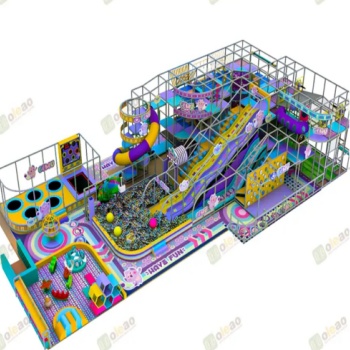
For communities that want a more active route, climbing frames can also be combined with obstacle-style play. A layout concept similar to commercial indoor playground equipment with obstacle routes shows how climbing, crossing, crawling, and balancing elements can be organized into a more engaging movement experience.
The goal is not to fill the space with as many items as possible. The goal is to create a balanced play environment that is safe, attractive, and easy to use.
8. Maintenance and Long-Term Community Value
Playground equipment in residential communities must remain safe and attractive over time. Regular maintenance protects children and preserves the value of the shared facility.
Key maintenance tasks include:
Checking bolts, connectors, ropes, panels, and moving parts
Inspecting safety surfacing for damage or loss of cushioning
Cleaning surfaces to remove dirt, debris, and water marks
Monitoring rust, fading, cracking, or weather-related wear
Repairing damaged components before reopening the play area
Keeping inspection and maintenance records
A well-maintained climbing frame can serve the community for years. For property managers, this reduces safety risks and helps maintain resident satisfaction. For developers, it supports the long-term image of the residential project.
9. Choosing the Right Playground Equipment Provider
Selecting a reliable playground equipment provider is important for residential community projects. The provider should understand safety, customization, material durability, installation requirements, and long-term maintenance.
A suitable provider should support:
Custom layout planning for different community sizes
Age-appropriate climbing frame design
Durable materials for frequent use
Safety-focused structure and surfacing suggestions
Clear production and installation communication
Practical maintenance awareness
For developers and community planners, the right provider should not simply sell equipment. It should help match the playground solution to the real site conditions, user groups, and management needs of the residential community.
Community Planning Notes
Playground equipment can enhance a residential community when it is planned as part of the overall public space strategy. Climbing frames are especially valuable because they combine active movement, developmental benefits, social interaction, and efficient use of space.
For small residential communities, a compact climbing frame with slides, balance elements, and simple climbing routes may provide strong value without taking too much space. For larger developments, climbing frames can become part of a more complete family recreation area with seating, shade, landscape design, and multiple age zones.
The best result comes from balancing community needs, child development, safety control, maintenance capacity, and long-term residential appeal. For more ideas on playground equipment planning and commercial play space solutions, visit Aoleao.


 English
 العربية
 Français
 Русский
 Español
 Português
 Deutsch
 italiano
 日本語
日本語 한국어
한국어 Nederlands
 Tiếng Việt
 ไทย
ไทย Polski
 Türkçe
 አማርኛ
አማርኛ ພາສາລາວ
 ភាសាខ្មែរ
 Bahasa Melayu
 ဗမာစာ
ဗမာစာ தமிழ்
தமிழ் Filipino
 Bahasa Indonesia
 magyar
 Română
 Čeština
 Монгол
 қазақ
қазақ Српски
 हिन्दी
 فارسی
فارسی Kiswahili
 Slovenčina
 Slovenščina
 Norsk
Norsk Svenska
 українська
 Ελληνικά
 Suomi
Suomi Հայերեն
 עברית
עברית Latine
 Dansk
Dansk اردو
اردو Shqip
Shqip বাংলা
বাংলা Hrvatski
 Afrikaans
 Gaeilge
 Eesti keel
 Māori
Māori