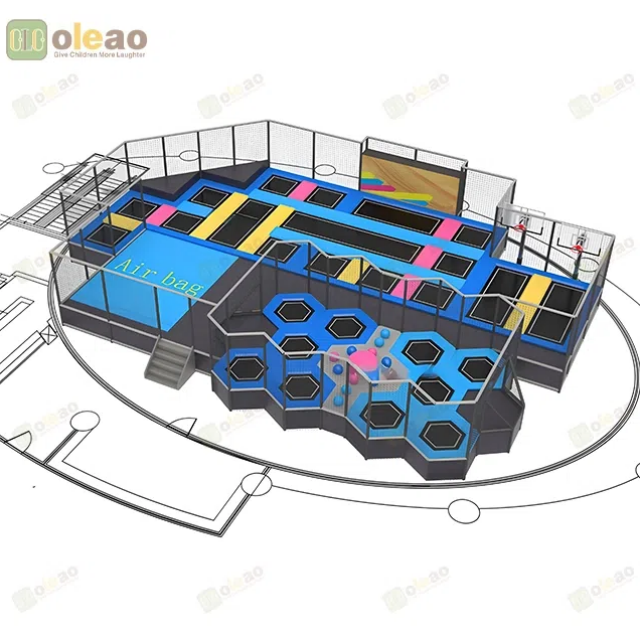
Trampoline Park Flow and Themed Zones
Guest flow, themed zones, and thoughtful sightlines are crucial elements that turn casual visits into longer stays and repeat bookings. A well-designed trampoline park encourages participants of different ages to explore, stay active, and engage with every corner of the facility.
Aoleao helps operators transform indoor leisure spaces into vibrant, safe, and interactive destinations that blend fun, fitness, and social interaction. Beyond just trampolines, modern trampoline park equipment can integrate multifunctional attractions for toddlers, children, teens, families, and group visitors, making every visit more memorable and easier to market.
Zoning to Match User Journeys
Designing zones to align with visitor types is one of the most effective ways to increase dwell time and create a smoother experience for all guests. Proper zoning helps reduce congestion, improve safety management, and provide tailored experiences that match each visitor’s energy level and interests.
A successful trampoline park should not place every activity in one open area without clear structure. Operators need to consider how guests move from entrance to check-in, lockers, main attractions, party rooms, food areas, and exits. With professional 3D layout planning, the venue layout can be reviewed before production, helping operators plan guest flow, sightlines, safety zones, and activity routes more clearly.
Quiet/Soft-Play Zones for Toddlers
Young children need spaces that allow safe exploration without overwhelming sensory input. Incorporating soft mats, low-impact trampolines, mini climbing walls, foam elements, and gentle interactive features can help toddlers enjoy physical activity while parents watch nearby.
These areas should be positioned away from high-energy zones to reduce noise, collisions, and supervision pressure. A well-planned toddler zone gives families more confidence and creates positive early experiences that encourage repeat visits. Operators can also introduce parent-child activities, guided mini-jumping sessions, or simple interactive games to build stronger engagement from both children and adults.
Soft-play zones may also include sensory panels, foam pits, and gentle slides to support physical development and stimulate curiosity. For commercial venues, this helps the trampoline park serve a wider age range instead of focusing only on older children and teenagers.
Party and Viewing Areas for Parents
Designated areas for parties, birthday celebrations, and parent viewing not only support social gatherings, but also help create a more organized guest flow. Seating arrangements with clear sightlines to multiple attractions allow parents to supervise children more easily while enjoying food service, rest areas, or social spaces.
Strategically placed party rooms or rental spaces can also become important revenue points. Birthday parties, school groups, family gatherings, and small community events all need spaces that feel comfortable, visible, and easy to manage. Comfortable furniture, charging stations, and themed decoration can further improve the parent experience, making the park a destination for both children’s activity and family leisure.
Flexible areas can also be used for workshops, fitness sessions, holiday programs, or private bookings, adding value beyond standard trampoline activities.
Attractions Mix: How Many and Which Types to Include
The variety of attractions directly influences visitor engagement and retention. Balancing different activities ensures that guests of varying ages and skill levels remain entertained, while also creating opportunities for skill development, competition, and repeat visits.
For investors and operators, attraction mix should be connected with the business model. A venue designed for birthday parties may need party rooms, open jump areas, and younger-child zones. A venue targeting teens and active play may need ninja courses, challenge routes, sports courts, foam pits, and climbing features. A more complete layout with commercial trampoline park equipment can support multiple visitor groups within one project.
Balance Between Free-Jump, Challenge Courses, and Skill Zones
Free-jump zones are the core of many trampoline parks, offering open jumping space for casual visitors and fitness-focused users. Challenge courses, ninja-style obstacles, and skill zones provide more structured physical and mental challenges, encouraging guests to return and try again.
By offering a mix of open jump areas and targeted skill experiences, parks can appeal to a wider audience, from children learning coordination to teens and adults seeking more intense physical activity. Operators may consider beginner, intermediate, and advanced challenge lines so guests can progress over time and feel a sense of achievement.
Adding timing systems, scoreboards, or gamified challenges can further improve motivation and visitor excitement. These elements also create stronger content for social media, events, and group activities.
Seasonal and Rotating Attractions to Renew Interest
Introducing seasonal or rotating attractions keeps the experience fresh for returning visitors. Temporary installations such as themed trampolines, climbing features, or obstacle courses connected with holidays and special events can encourage guests to return multiple times a year.
This strategy also supports marketing campaigns and social media content, helping the park stay visible in a competitive leisure market. Adding interactive technology elements, motion sensors, or light effects can make the experience more memorable and easier for guests to share online.
A calendar of seasonal events can be promoted in advance, allowing families, schools, and groups to plan visits earlier. This can help improve attendance during off-peak periods and create stronger repeat-visit habits.
UX Details That Increase Time-on-Site and Revenue
Beyond attractions, small user experience details can significantly influence visitor satisfaction and operational efficiency. These details often determine whether guests enjoy the visit, stay longer, and come back again, or leave frustrated and unlikely to return.
A trampoline park should be planned not only for play, but also for check-in, storage, movement, rest, food, safety communication, and staff management. When these details are considered early, the venue becomes easier to operate and more comfortable for families.
Easy Booking Kiosks, Lockers, and Food & Beverage Sightlines
Placing self-service booking kiosks at convenient locations can simplify check-in and reduce queueing. Lockers near activity zones provide secure storage without interrupting play, while clear sightlines to food and beverage areas allow guests to plan breaks without leaving the main action.
These details help visitors experience less friction while giving operators more opportunities to increase on-site spending. Digital pre-booking or mobile booking options can also streamline the process, improve convenience, and reduce staff pressure during peak hours.
Food options that serve families, including simple meals, drinks, snacks, and child-friendly choices, can encourage longer stays and support birthday parties or group bookings.
Clear Signage, Safety Messaging, and Staff Visibility
Well-placed signage guides visitors through the park, highlights key attractions, and communicates safety rules clearly. Safety messages, combined with visible and approachable staff, create a more secure environment for families, schools, and group visitors.
Clear navigation reduces congestion and improves guest satisfaction. Staff training in guest engagement, basic first aid, attraction monitoring, and rule communication can further improve safety and service quality.
For international or multicultural markets, multilingual signage and simple visual instructions may also improve accessibility and reduce confusion. Before equipment is delivered, a clear production process, accurate manufacturing, packing, and shipping coordination can help the project move more smoothly from design to installation.
Theming, Social Media Spots, and Photo Moments
Creating shareable moments has become an important strategy for modern entertainment venues. Trampoline parks can benefit from themed areas that are visually appealing, interactive, and easy for guests to remember.
A theme does not need to cover every corner of the park. Even a few strong visual points, such as LED walls, colorful murals, themed entrances, challenge course signs, or foam pit photo spots, can make the venue more recognizable and easier to promote.
Instagrammable Installations That Drive Free Marketing
Decorative elements, unique climbing structures, vibrant murals, and branded photo corners provide natural photo opportunities. When guests share their experiences on social media, they help extend the park’s reach and attract new visitors.
These installations should be positioned near high-traffic zones, party spaces, or popular attractions to maximize exposure. Interactive photo areas, such as LED walls, glow jump zones, or foam pit jump-in points, can encourage creative content generation and make the park more attractive to younger visitors and families.
Operators can also work with local influencers, parent communities, schools, or event partners to promote special activities and increase local awareness.
Event Nights to Expand Audience
Special event nights, such as dodgeball tournaments, glow-in-the-dark jumps, fitness classes, or holiday-themed activities, can help expand the park’s audience. These events create community engagement, encourage repeat visits, and provide additional revenue opportunities.
Flexible layouts and modular attraction design make themed events easier to organize. A venue that can quickly adjust activity areas, party spaces, and staff control points will be easier to operate during busy event periods.
Marketing these events through email, social media, school partnerships, and local community channels can bring new visitor traffic while strengthening relationships with existing customers. Loyalty programs or package deals during events can further encourage return visits.
Conclusion
A trampoline park that integrates thoughtful zoning, a balanced mix of attractions, user-friendly experience details, and shareable themed moments can improve engagement, dwell time, and repeat bookings. For operators, these design decisions are not only about entertainment; they also affect safety management, event planning, customer satisfaction, and long-term revenue potential.
Aoleao provides custom design support, layout planning, equipment production, shipping coordination, installation guidance, and after-sales support for commercial trampoline park projects. If you are planning a new venue or upgrading an existing indoor leisure space, you can contact us with your floor plan, site size, and project goals.
With practical trampoline park solutions and B2B project support, Aoleao helps operators create safer, more engaging, and more commercially valuable indoor play destinations.


 English
 العربية
 Français
 Русский
 Español
 Português
 Deutsch
 italiano
 日本語
日本語 한국어
한국어 Nederlands
 Tiếng Việt
 ไทย
ไทย Polski
 Türkçe
 አማርኛ
አማርኛ ພາສາລາວ
 ភាសាខ្មែរ
 Bahasa Melayu
 ဗမာစာ
ဗမာစာ தமிழ்
தமிழ் Filipino
 Bahasa Indonesia
 magyar
 Română
 Čeština
 Монгол
 қазақ
қазақ Српски
 हिन्दी
 فارسی
فارسی Kiswahili
 Slovenčina
 Slovenščina
 Norsk
Norsk Svenska
 українська
 Ελληνικά
 Suomi
Suomi Հայերեն
 עברית
עברית Latine
 Dansk
Dansk اردو
اردو Shqip
Shqip বাংলা
বাংলা Hrvatski
 Afrikaans
 Gaeilge
 Eesti keel
 Māori
Māori