Tunnel mazes have become a familiar and effective attraction in many indoor theme parks. They are simple for children to understand, easy to combine with other play structures, and flexible enough to fit different venue sizes and themes.
For operators, tunnel mazes offer more than a fun crawling experience. They can improve activity flow, increase children’s engagement, support physical and cognitive development, and help indoor parks create a stronger themed environment. When designed professionally, tunnel mazes can become an important part of a complete indoor playground equipment system.
1. The Appeal of Tunnel Mazes
Tunnel mazes are popular because they give children a sense of exploration. Unlike single-function attractions, a tunnel maze creates a route, a challenge, and a small adventure inside the play space.
Interactive Exploration for Children
Children enjoy spaces that allow them to move, discover, and make choices. A tunnel maze gives them winding paths, small openings, different directions, and hidden corners to explore.
This type of play is more interactive than passive entertainment. Children need to crawl, turn, climb, look ahead, remember routes, and decide where to go next. These actions keep them physically and mentally engaged.
For indoor theme parks, this is valuable because tunnel mazes can extend playtime without requiring a very large footprint. They can also be connected with slides, ball pits, soft obstacles, climbing areas, and themed activity zones to create a more complete visitor journey.
A product concept such as indoor play area equipment with color tunnel slides shows how tunnel features can be integrated into compact indoor play layouts while still keeping the experience visually attractive and movement-rich.
Controlled and Parent-Friendly Play
Indoor tunnel mazes are usually designed with soft materials, enclosed routes, padded surfaces, and controlled access points. This helps create a safer play environment for younger children.
For parents, visibility and supervision are important. Open sections, mesh panels, transparent windows, or clearly planned exits can help staff and parents monitor children more easily.
For operators, this controlled structure is useful because it allows children to explore independently while still keeping the play area manageable. A well-designed tunnel maze balances freedom and safety.
Year-Round Indoor Entertainment
Tunnel mazes also support consistent operation. Since they are placed inside indoor theme parks, they are not affected by rain, heat, snow, or seasonal weather changes.
This makes them useful for venues that need stable visitor appeal throughout the year, such as shopping mall play areas, family entertainment centers, children’s activity centers, and indoor amusement parks.
Because tunnel mazes are suitable for repeat play, children can return to the same structure and still enjoy different routes, games, and group activities.
2. Designing Tunnel Mazes for Indoor Theme Parks
A tunnel maze should not be added only as decoration. Its design should support space efficiency, visitor flow, safety, supervision, and theme consistency.
Space Optimization
Indoor theme parks often need to maximize limited space. Tunnel mazes are useful because they can use both horizontal and vertical space.
A compact maze can fit into corners, under platforms, around slides, or inside multi-level play structures. Larger venues can use tunnel mazes as part of a broader route that connects climbing, crawling, sliding, and ball pool areas.
The layout should be planned carefully. If the maze is too narrow, too hidden, or poorly connected, it may cause congestion or reduce supervision efficiency. If planned well, it can guide children naturally from one activity zone to another.
For projects that need better use of height and compact footprints, multi-level indoor playground equipment offers a similar planning logic: using layered movement routes to create more activity value within limited indoor space.
Customizable Themes and Visual Design
One reason tunnel mazes remain popular is that they can be customized easily. They can match many different indoor theme park concepts, such as jungle exploration, ocean adventure, space travel, candy world, city maze, animal kingdom, or futuristic play.
Theme design affects how children perceive the maze. A simple tunnel becomes more attractive when supported by color, lighting, shapes, patterns, and storytelling details.
For operators, this customization helps create a stronger brand identity. A themed tunnel maze can become a recognizable feature that children remember and parents photograph.
However, theme design should not reduce usability. The route still needs enough width, safe materials, clear exits, proper lighting, and easy staff visibility.
Integration with Other Attractions
Tunnel mazes work best when they are connected to other play elements. They can lead to a slide, connect to a ball pit, pass under a climbing frame, or link different zones inside the park.
This integrated design improves the overall play experience. Children are not just entering and leaving one attraction; they are moving through a sequence of activities.
A commercial layout such as commercial indoor amusement equipment for colorful play parks can use tunnel-style routes, climbing modules, slides, soft elements, and themed areas to create a stronger indoor amusement environment.
For operators, integration also helps manage visitor flow. A well-connected maze can reduce overcrowding in one area and distribute children more evenly across the play space.
3. Benefits of Tunnel Mazes for Indoor Theme Park Owners
Tunnel mazes provide practical commercial value when they are designed as part of a complete indoor play system.
Increasing Visitor Engagement
Tunnel mazes keep children involved because they combine movement and discovery. Children can crawl through different paths, chase friends, search for exits, invent games, and repeat the activity many times.
This type of repeatable play is valuable for indoor theme parks. It helps children stay engaged longer and gives families more reasons to spend time inside the venue.
For operators, higher engagement can support better visitor satisfaction, stronger repeat-visit potential, and more effective use of the play area.
Supporting Revenue Opportunities
A tunnel maze may not always be a separate ticketed attraction, but it can still contribute to revenue indirectly. When children stay active and entertained for longer, families are more likely to remain in the venue, participate in other attractions, book parties, or purchase food and services.
Tunnel mazes can also support themed events. For example, a maze can be adjusted with seasonal decorations, treasure-hunt tasks, light effects, or simple challenge cards to create new reasons for families to revisit.
For birthday parties, school visits, and group activities, tunnel mazes provide a simple but effective attraction that children can use together.
Strengthening Brand Differentiation
In a competitive indoor entertainment market, operators need attractions that are both functional and memorable. A customized tunnel maze can help a venue stand out from generic play spaces.
The theme, color, route design, and connection with other attractions can all support the venue’s identity. A strong tunnel maze can become part of the park’s visual memory and improve the overall impression of the play environment.
This is especially useful for indoor parks that want to position themselves as more than a simple children’s playroom.
4. Tunnel Mazes and Child Development
Tunnel mazes are popular with children because they feel like adventure. But they also support several areas of development.
Enhancing Physical Activity
Tunnel mazes encourage children to crawl, climb, bend, turn, balance, and move through different body positions. These movements help develop gross motor skills, muscle control, coordination, and flexibility.
Unlike flat play areas, a tunnel maze requires children to adjust their movement constantly. They may need to slow down, turn carefully, avoid another child, or climb through a slightly different path.
This makes the maze useful for active indoor play, especially in venues where children need a safe space to burn energy regardless of outdoor weather.
Promoting Problem-Solving Skills
A maze naturally creates small problems for children to solve. They need to remember where they came from, choose a direction, test a route, and find their way out.
This supports spatial awareness, memory, planning, and decision-making. Children learn through movement and exploration rather than formal instruction.
For older children, the maze can include more complex routes, theme-based missions, or challenge points. For younger children, the route should remain simple, safe, and easy to supervise.
Encouraging Social Interaction
Tunnel mazes also support group play. Children can explore together, follow one another, communicate about directions, wait for turns, or create their own games.
These interactions help develop cooperation, communication, patience, and social confidence. For shy children, a maze can offer a playful way to join group activity without too much pressure.
For indoor theme parks, this social value is important because family visitors often look for attractions where children can interact positively, not only play alone.
5. Challenges in Implementing Tunnel Mazes
Although tunnel mazes are valuable, operators should understand the practical planning and management requirements before installation.
Cost Considerations
The cost of a tunnel maze depends on size, materials, theme design, structure, lighting, padding, installation complexity, and whether it is integrated with other play equipment.
A simple tunnel route may be relatively compact, while a large themed maze with multi-level sections, digital features, and custom decorations will require a larger budget.
Operators should avoid choosing only by appearance. The investment should be evaluated based on play value, safety, durability, maintenance, capacity, and how well the maze supports the whole venue layout.
Maintenance and Hygiene
Tunnel mazes need regular cleaning and inspection. Since children crawl and touch surfaces frequently, hygiene is especially important in indoor environments.
Operators should check:
Padding condition
Tunnel surfaces
Mesh or transparent panels
Lighting or interactive components
Fasteners and structural connections
Flooring and entry points
Hidden corners where dust or small objects may collect
A reliable production process helps ensure the equipment is built with suitable materials and stable workmanship, but long-term performance still depends on daily operation and maintenance.
Safety and Supervision
Safety planning is essential. Tunnel mazes should use child-safe materials, soft padding, proper ventilation, clear exits, suitable tunnel width, fire-safe materials where required, and easy supervision points.
The design should also avoid blind spots that make it difficult for staff to monitor children. For larger mazes, multiple access points or open viewing sections may be needed.
Operators should also provide simple rules, such as no pushing, no blocking exits, no food inside the maze, and age-appropriate use.
Professional 3D layout planning can help review the maze’s placement, route direction, staff visibility, safety clearance, and connection with other attractions before production.
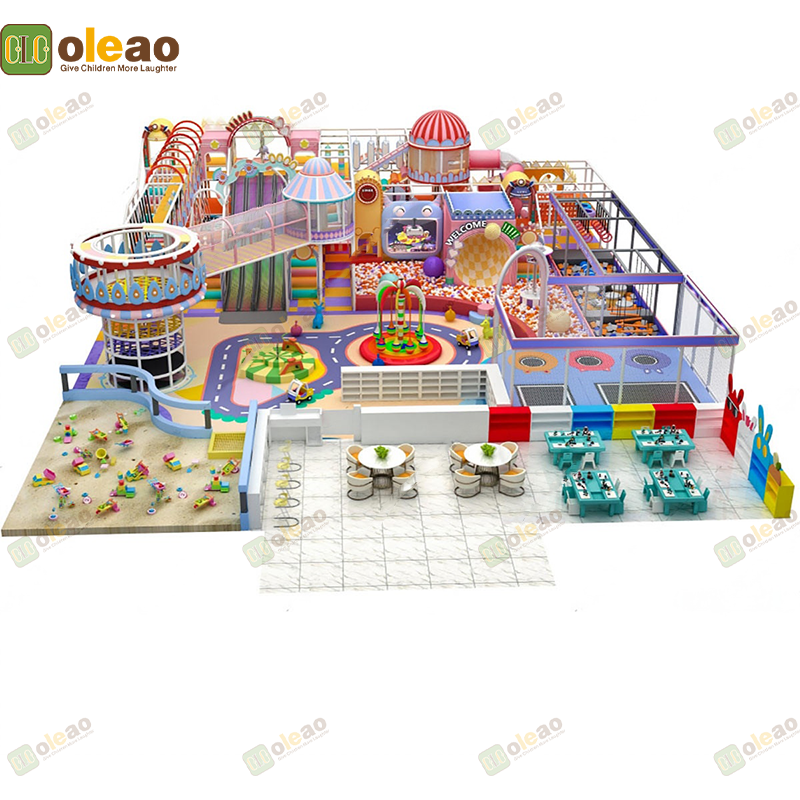
6. Future Trends in Tunnel Mazes
Tunnel maze design continues to evolve as indoor theme parks look for more immersive and flexible attractions.
Technology-Enhanced Play
Lighting, sound effects, sensors, and simple interactive features can make tunnel mazes more engaging. For example, lights may change as children move through the maze, or sound effects may match a jungle, ocean, or space theme.
Digital features should be used carefully. They should improve the play experience without making the attraction too complicated to maintain.
Eco-Friendly and Durable Materials
More operators are paying attention to material safety and sustainability. Durable panels, low-energy lighting, recyclable components, and long-lasting finishes can reduce replacement pressure and support better long-term value.
For B2B projects, material selection should consider not only environmental appeal but also cleaning, wear resistance, fire safety requirements, and maintenance cost.
Flexible and Modular Maze Design
Modular tunnel maze systems are becoming more useful because operators may need to update layouts, expand zones, or refresh the theme over time.
A modular approach allows parts of the maze to be adjusted without rebuilding the entire attraction. This can help indoor theme parks maintain freshness and respond to changing visitor needs.
FAQ
What is a tunnel maze in an indoor theme park?
A tunnel maze is an interactive play structure with connected tunnels, routes, and pathways. Children can crawl, explore, choose directions, and move through the maze in a safe indoor environment.
Why are tunnel mazes popular in indoor theme parks?
Tunnel mazes are popular because they combine exploration, movement, imagination, and social play. They are easy for children to understand and can be integrated with many other attractions.
How do tunnel mazes benefit indoor park operators?
They can increase visitor engagement, support repeat play, improve space use, strengthen theme design, and create more activity variety inside the venue.
What safety features are important for tunnel mazes?
Important safety features include soft padding, safe materials, clear exits, proper ventilation, visible supervision points, suitable tunnel size, and regular inspection.
Can tunnel mazes be customized?
Yes. Tunnel mazes can be customized by theme, color, size, route complexity, lighting, structure, and connection with other play zones.
Indoor Theme Park Planning Notes
Tunnel mazes remain popular in indoor theme parks because they combine several values in one attraction: active movement, exploration, social play, theme storytelling, and efficient use of space.
For smaller indoor play venues, a compact tunnel maze connected with slides or soft play modules can create strong activity value without taking too much floor area. For larger indoor theme parks, tunnel mazes can become part of a multi-zone journey that connects climbing, crawling, ball pits, interactive features, and themed play areas.
The best result comes from balancing route design, safety visibility, cleaning access, visitor flow, theme identity, and long-term maintenance. A tunnel maze should not be added only because it is popular; it should support the overall indoor park layout and operating model. For more indoor play planning ideas and commercial amusement equipment solutions, visit Aoleao.


 English
 العربية
 Français
 Русский
 Español
 Português
 Deutsch
 italiano
 日本語
日本語 한국어
한국어 Nederlands
 Tiếng Việt
 ไทย
ไทย Polski
 Türkçe
 አማርኛ
አማርኛ ພາສາລາວ
 ភាសាខ្មែរ
 Bahasa Melayu
 ဗမာစာ
ဗမာစာ தமிழ்
தமிழ் Filipino
 Bahasa Indonesia
 magyar
 Română
 Čeština
 Монгол
 қазақ
қазақ Српски
 हिन्दी
 فارسی
فارسی Kiswahili
 Slovenčina
 Slovenščina
 Norsk
Norsk Svenska
 українська
 Ελληνικά
 Suomi
Suomi Հայերեն
 עברית
עברית Latine
 Dansk
Dansk اردو
اردو Shqip
Shqip বাংলা
বাংলা Hrvatski
 Afrikaans
 Gaeilge
 Eesti keel
 Māori
Māori