Buying the right commercial trampoline equipment can directly affect your park’s safety, durability, guest experience, and daily operation. For park owners and investors, equipment selection is not only about appearance. It also influences maintenance costs, visitor flow, staff supervision, and long-term business value.
Aoleao provides commercial trampoline park solutions for indoor activity centers, family entertainment venues, and large indoor leisure projects. From layout planning to equipment production, the right supplier can help operators build a safer, more engaging, and more practical trampoline park for different age groups and visitor needs.
Know Your Audience and Park Format Before You Buy
Before choosing equipment, park owners should first understand the type of venue they want to build. A small family activity center, a large trampoline park, a mixed family entertainment center, and a sports-focused adventure venue may all require different equipment combinations.
The right trampoline park equipment should match the target visitors, site size, safety requirements, budget plan, and future expansion direction. This early planning step helps avoid buying equipment that looks attractive but does not fit the actual business model.
Understanding Age Mix and Peak Traffic Patterns
When planning a trampoline park, understanding your target audience is crucial. Children, teenagers, and adults have different jumping preferences, risk levels, and activity expectations. Peak hours may also change depending on weekends, school holidays, birthday seasons, or local family traffic.
Designing areas for different age groups helps improve flow and safety. Toddlers usually need smaller, lower-impact trampolines and soft activity areas, while teens and adults may enjoy more advanced features such as foam pits, sports courts, ninja courses, or climbing challenges.
Some parks also include specialized zones for birthday parties, school groups, or corporate events. These spaces should be designed with enough room for larger groups without interfering with the general activity flow. Park owners may also consider accessibility needs, such as wider pathways, clear entrance routes, and lower-impact areas, to make the park more inclusive and easier to manage.
Using booking data, visitor observation, or early customer research can also help operators decide how much space should be allocated to toddlers, families, teenagers, party groups, and active sports users.
Choosing Attractions: Open Jump, Foam Pits, Ninja Courses, and Basketball
The mix of attractions defines the guest experience. Open jump areas are essential because they allow flexible movement and can accommodate many visitors at the same time. Foam pits provide a more exciting landing experience for visitors practicing flips or tricks. Ninja courses add a fitness-oriented challenge, attracting older children, teens, and adults who enjoy agility-based activities.
Trampoline basketball zones combine skill and fun, creating a competitive play experience that encourages repeat visits. For commercial venues, a balanced attraction mix can support birthday parties, group activities, school visits, and family entertainment within one project.
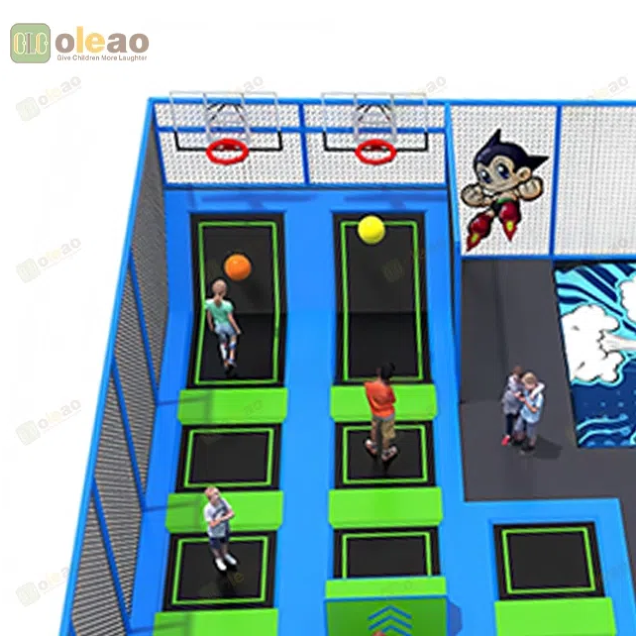
Some parks now integrate interactive features such as climbing walls, digital games, timing systems, or light-based challenges alongside trampolines. These hybrid attractions help diversify the visitor experience and make the park stand out from competitors. For example, a layout with commercial trampoline park equipment can combine jump areas, sports courts, and challenge zones for different age groups and operating scenarios.
Operators can also use seasonal or themed challenges to create fresh excitement and attract returning visitors without completely changing the whole park layout.
Safety Standards and Key Technical Specifications to Insist On
Safety is the foundation of any commercial trampoline park project. Poor-quality frames, weak padding, loose netting, or unclear safety zones can increase risk and create long-term operation problems. When comparing suppliers, park owners should look beyond price and check technical details, material quality, safety design, and compliance support.
A reliable supplier should be able to explain the structure, material selection, production process, and installation requirements clearly. This is especially important for overseas projects, where local regulations, fire safety, and certification/compliance requirements may differ by market.
Frame, Spring System, Padding, and Netting Quality
High-quality galvanized steel frames can improve durability and reduce corrosion risk. A properly engineered spring system helps provide a consistent bounce while reducing unnecessary strain on users. Padding and safety netting should be thick, tear-resistant, and securely fixed to protect users from hard edges and open gaps.
Park owners should also check whether the equipment includes reinforced edges, double-layer padding, anti-slip surfaces, and strong connection points. These details may not always be visible in a simple product photo, but they can affect daily safety and long-term maintenance.
It is also useful to ask suppliers about material test reports, production standards, and available certification or compliance support. Operators should also establish daily inspection routines for springs, mats, padding, and netting. Staff training on equipment checks and safety rules can further improve operational safety.
Fire, Electrical, and Structural Code Considerations
Trampoline parks may include lighting systems, electronic scoreboards, interactive games, timing devices, and densely used activity zones. Fire prevention, flame-retardant materials, clearly marked exits, smoke detection systems, and emergency access should be considered during the design stage.
Electrical wiring should meet local requirements and be protected from accidental impact. Structural load requirements for platforms, climbing zones, and elevated areas should also be reviewed carefully to support safer long-term operation.
Beyond equipment compliance, operators should prepare emergency response procedures, evacuation routes, and staff training. These practices help build trust with visitors and parents while supporting smoother daily management.
Durability, Maintenance, and Life-Cycle Cost Analysis
Choosing commercial trampoline equipment should not only focus on the first purchase price. Park owners also need to consider life-cycle cost, including maintenance frequency, spare parts, cleaning requirements, downtime, and future replacement needs.
Durable equipment may require a higher initial investment, but it can reduce repair pressure and keep the venue running more smoothly over time. This is especially important for parks with high visitor traffic, birthday bookings, school groups, or weekend peak periods.
Choosing Materials that Reduce Long-Term Maintenance
Investing in durable materials is important for a profitable trampoline park. Galvanized steel frames resist corrosion, heavy-duty springs maintain better tension, and high-quality padding can reduce wear from frequent use. Tear-resistant mats, reinforced stitching, and washable surfaces can also make daily maintenance easier.
Some parks use color-coded padding or modular parts to simplify replacements and reduce labor time. Operators should also consider environmental factors such as humidity, indoor temperature, cleaning routines, and visitor volume when selecting materials.
Regular cleaning protocols help preserve material quality and keep the venue more hygienic for visitors. Clean, well-maintained equipment also improves parent confidence and strengthens the park’s professional image.
Spare Parts Strategy and Service Agreements
A reliable spare parts strategy helps reduce disruption to daily operations. Park owners should work with suppliers who can provide replacement components, technical support, and clear service communication. Common high-wear parts may include springs, mats, padding, netting, and connection accessories.
For busy venues, keeping certain spare parts on site can reduce downtime during peak seasons. Service agreements should also clarify warranty coverage, maintenance guidance, technical support, and response expectations.
A clear production process is also useful because it helps operators understand how equipment is manufactured, packed, shipped, and prepared for installation. This gives park owners more control over project timing and delivery planning.
Layout, Modularity, and Scalability for Future Growth
A trampoline park is not just a set of equipment. It is a complete space that needs to work for visitor movement, age zoning, staff supervision, queue management, party rooms, viewing areas, and future upgrades.
Good layout planning can improve safety, reduce congestion, and help guests move naturally from one activity to another. It can also make daily operation easier for staff and create more opportunities for parties, group bookings, and repeat visits.
Zoning by Age and Skill to Maximize Throughput
Efficient layout planning is vital for safety and guest satisfaction. Zoning trampoline areas by age or skill level allows operators to control activity flow, reduce congestion, and ensure each visitor enjoys a suitable level of challenge.
Clearly defined zones also make supervision easier and reduce staff pressure. For example, toddler areas should be separated from high-energy jump areas. Beginner users should not be forced into advanced challenge routes. Sports courts, foam pits, and ninja courses should have clear entrances, exits, and buffer areas.
Advanced layout planning may also include parent viewing platforms, snack bars, rest areas, party rooms, and staff control points near high-traffic zones. Through 3D layout planning, operators can review these details before production and reduce costly changes later.
How Modular Equipment Saves Capital During Expansion
Modular trampoline systems allow parks to expand or adjust attractions without major renovation. By investing in flexible equipment, park owners can add new features, rotate attractions, or change the layout according to seasonal demand and visitor feedback.
This can help reduce future capital pressure while keeping the park experience fresh. For example, a park may start with open jump areas, foam pits, and basketball zones, then later add a ninja route, interactive challenge, or new party area after testing customer demand.
Modular design also supports phased investment. Operators can scale the venue step by step instead of building every feature at once. This is useful for new park owners who want to control risk while still leaving room for future growth.
Conclusion
Selecting the right commercial trampoline equipment requires careful planning around audience needs, safety standards, durability, layout, maintenance, and future scalability. The best equipment choice should support both visitor experience and daily operation, helping park owners create a safer, more engaging, and easier-to-manage venue.
Aoleao supports commercial trampoline park projects with custom design, layout review, equipment production, shipping coordination, installation guidance, international certification/compliance support, and after-sales service. If you are planning a new trampoline park or upgrading an existing indoor activity venue, you can contact us with your floor plan, site size, and project requirements.
With practical commercial trampoline equipment solutions and B2B project support, Aoleao helps park owners build indoor leisure spaces designed for long-term operation and commercial value.


 English
 العربية
 Français
 Русский
 Español
 Português
 Deutsch
 italiano
 日本語
日本語 한국어
한국어 Nederlands
 Tiếng Việt
 ไทย
ไทย Polski
 Türkçe
 አማርኛ
አማርኛ ພາສາລາວ
 ភាសាខ្មែរ
 Bahasa Melayu
 ဗမာစာ
ဗမာစာ தமிழ்
தமிழ் Filipino
 Bahasa Indonesia
 magyar
 Română
 Čeština
 Монгол
 қазақ
қазақ Српски
 हिन्दी
 فارسی
فارسی Kiswahili
 Slovenčina
 Slovenščina
 Norsk
Norsk Svenska
 українська
 Ελληνικά
 Suomi
Suomi Հայերեն
 עברית
עברית Latine
 Dansk
Dansk اردو
اردو Shqip
Shqip বাংলা
বাংলা Hrvatski
 Afrikaans
 Gaeilge
 Eesti keel
 Māori
Māori