Soft climbing sets are practical and flexible equipment for indoor activity rooms, especially spaces designed for toddlers, preschool children, and early childhood programs. They combine movement, sensory exploration, imagination, and safe physical challenge within a soft, controlled play environment.
For daycare centers, parent-child centers, kids activity rooms, and commercial soft play venues, a soft climbing set is more than a group of foam blocks. When planned correctly, it can support physical development, social interaction, confidence-building, and better use of limited indoor space.
A well-designed soft climbing area can also work together with soft play equipment, ball pools, low slides, tunnels, stepping blocks, and themed play modules to create a more complete indoor activity room.
1. Developing Physical Skills with Soft Climbing Sets
Soft climbing sets help children practice important movement skills in a safer and lower-impact way. Because the equipment is padded and child-friendly, young children can climb, crawl, step, roll, and balance with more confidence.
Enhancing Gross Motor Skills
Gross motor skills involve large muscle movements such as crawling, climbing, jumping, stepping, and balancing. Soft climbing sets naturally encourage these actions.
When children climb over soft blocks, crawl through tunnels, or step onto foam platforms, they use the muscles in their arms, legs, shoulders, and core. These repeated movements help build strength, endurance, and body control.
For indoor activity rooms, this is important because young children need regular movement opportunities. A soft climbing set allows them to stay active even in a compact indoor space, without the intensity of larger playground equipment.
A toddler-focused solution such as a toddler soft play area can use soft climbing elements to create safe first-step movement experiences for younger users.
Improving Balance and Coordination
Soft climbing sets also support balance and coordination. When children walk across soft stepping blocks, climb a ramp, or move from one foam shape to another, they need to adjust their posture and control their body position.
This helps improve proprioception, which is the body’s ability to understand where it is in space. It also supports bilateral coordination, because many soft climbing activities require children to use both sides of the body together.
For young children, these movements are not only physical exercise. They are part of early motor planning. Children learn how to look, decide, move, adjust, and try again.
2. Supporting Imaginative and Creative Play
Indoor activity rooms should not only provide movement. They should also give children space to create stories, roles, and games. Soft climbing sets are useful because they are open-ended.
Encouraging Creativity and Imagination
Unlike fixed play equipment with only one use, soft climbing sets can become many things in a child’s imagination. A soft ramp can become a mountain. Foam blocks can become a bridge, a castle, a vehicle, or a secret base. A tunnel can become part of a rescue mission or an animal cave.
This flexibility supports creative thinking. Children are not only using the equipment; they are building their own play scenarios. This makes the activity room more engaging and helps children return to the same equipment with new ideas.
For commercial venues, this repeat-play value matters. A modular product direction such as pastel modular soft play equipment can help operators create a softer, more flexible indoor play environment for younger children.
Role-Playing and Social Skill Development
Soft climbing sets also support role-play. Children may pretend to be explorers, animals, builders, firefighters, or superheroes while moving through the layout.
During this type of play, they practice communication, turn-taking, cooperation, and emotional expression. They may decide who leads the game, who follows, where the “bridge” should go, or how to solve a pretend challenge.
Because the equipment is soft and low-height, children can focus more on interaction and exploration rather than fear of falling. This makes soft climbing sets especially suitable for early childhood spaces where confidence and social comfort are important.
3. Promoting Sensory Development
Soft climbing sets provide a rich sensory experience. Young children learn through touch, color, movement, pressure, and spatial exploration, so the design of soft play equipment can strongly affect their engagement.
Exploring Textures, Colors, and Shapes
Soft climbing sets often include different shapes such as blocks, ramps, arches, cylinders, tunnels, wedges, and stepping pieces. Children can touch, push, stack, climb, and move across these forms.
The combination of soft surfaces, bright or pastel colors, and varied shapes helps children explore texture, size, distance, and direction. This supports early sensory integration and spatial understanding.
For indoor activity rooms, visual style also matters. Gentle color systems may create a calmer toddler space, while stronger color themes may make the area feel more energetic and memorable.
Sensory Awareness and Cognitive Growth
Sensory play supports cognitive development. When children push a foam block, crawl through a tunnel, or balance on a soft shape, they learn about cause and effect, body position, and space.
These activities can improve attention, memory, problem-solving, and adaptability. Children begin to understand how their actions affect objects and how their bodies move through different environments.
For operators, this gives soft climbing sets more value than simple decoration. They can become part of a developmental play system that supports both movement and early learning.
4. Building Confidence and Self-Esteem
Soft climbing sets give children safe opportunities to face small challenges. This is especially important for toddlers and preschoolers who are still learning how to trust their bodies.
Overcoming Challenges Safely
A child may hesitate before climbing a small ramp or stepping onto a soft block. Because the surface is cushioned and the height is controlled, the child can try again with less fear.
Each small success helps build confidence. Children learn that they can practice, make mistakes, adjust, and improve. This process supports resilience and a positive attitude toward physical activity.
The best soft climbing layouts provide different challenge levels. Some pieces should be easy enough for beginners, while others can offer slightly more challenge as children grow stronger and more confident.
Fostering a Positive Self-Image
When children master a movement, they feel proud. This sense of achievement helps build self-esteem.
Soft climbing sets also support non-competitive progress. Children do not need to win a game or outperform others. They can move at their own pace, repeat a route, or create their own challenge.
For daycare centers, parent-child centers, and early learning environments, this type of positive movement experience can be more suitable than high-intensity equipment.
5. Ensuring a Safer Indoor Play Environment
Safety is one of the main reasons soft climbing sets are widely used in indoor activity rooms. The soft materials help reduce impact and create a more forgiving play environment for young children.
Soft Materials for Injury Prevention
Quality soft climbing sets are usually made with foam cores and durable outer coverings such as vinyl or similar easy-clean materials. These materials help absorb impact when children fall, bump, or roll during play.
Important safety details include:
For commercial venues, safety should also include daily inspection and proper layout planning. Even soft equipment needs to be placed correctly to avoid crowding, blocked exits, or unsafe jumping behavior.
Controlled and Independent Play
Soft climbing sets create a controlled environment where children can explore more independently. Caregivers, teachers, or staff can adjust the layout based on age, ability, and available space.
This balance is important. Children need freedom to explore, but the activity room still needs clear boundaries, supervision points, and safe movement routes.
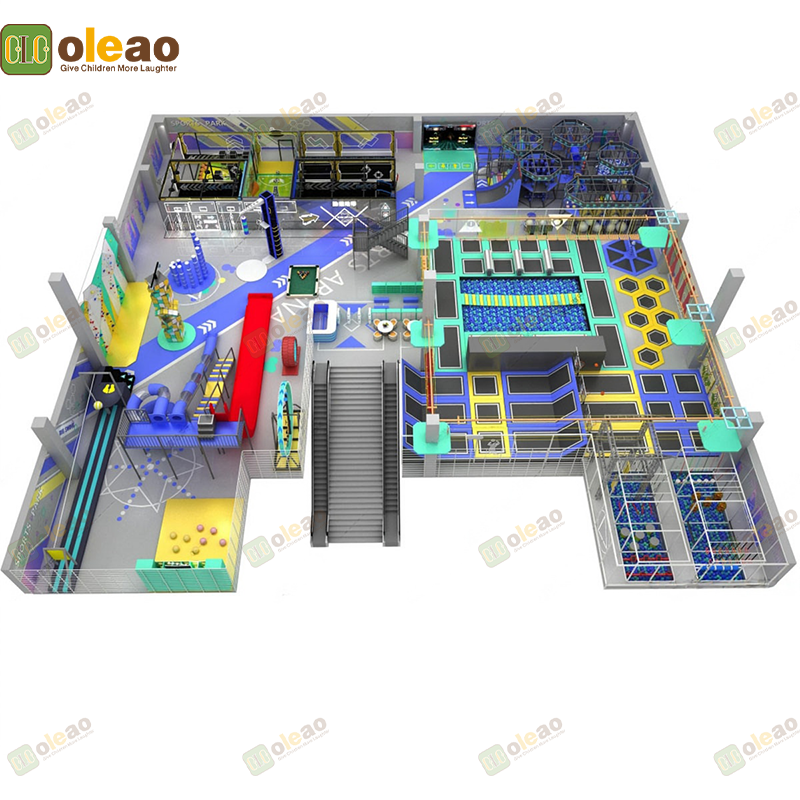
Early 3D layout planning can help operators review how soft climbing pieces connect with other zones, including ball pools, slides, parent seating, and entry areas.
6. Encouraging Social Interaction
Soft climbing sets are especially useful in group play environments because several children can use different parts of the layout at the same time.
Learning to Cooperate and Communicate
When children play together, they learn to share space, wait for turns, ask for help, and express ideas. A child may say, “Can I go next?” or “Let’s build a bridge here.” These small exchanges support language development and social awareness.
Soft climbing sets naturally create moments for cooperation. Children may move blocks together, design a pretend route, follow each other through a tunnel, or help a friend climb a soft ramp.
This makes them suitable for classrooms, daycare playrooms, parent-child centers, and commercial kids activity rooms.
Supporting Group Play
Because soft climbing pieces can be arranged in different ways, the layout can support both individual exploration and group activity.
One child can climb a ramp, another can crawl through a tunnel, and another can balance on soft stepping blocks. This reduces conflict and gives children multiple ways to participate.
A product layout such as commercial soft play equipment for kids activity rooms can combine soft climbing, sliding, and activity zones to support richer group play in compact indoor spaces.
7. Versatility and Layout Flexibility
One of the biggest advantages of soft climbing sets is their flexibility. They can be moved, rearranged, expanded, or combined with other soft play modules.
Easy to Move and Rearrange
Modular soft climbing sets allow operators or educators to change the layout according to the activity goal. A simple ramp-and-block setup can become a balance route, a crawling course, or a small obstacle path.
This keeps the indoor activity room fresh without requiring a complete redesign. It also allows the same equipment to support different age groups and activity levels.
For commercial operators, flexible layout is useful because it helps the space adapt to weekday toddler sessions, weekend family visits, group classes, or parent-child activities.
Practical Use in Commercial Indoor Spaces
Although some soft climbing sets can be temporarily moved within controlled environments, the main value for Aoleao’s business is in commercial indoor use. These sets are especially suitable for:
Daycare centers
Parent-child centers
Kindergarten activity rooms
Shopping mall play areas
Restaurant or café kids corners
Kids activity rooms
Indoor soft play venues
Family entertainment centers
The equipment should be selected based on the real site area, expected number of children, cleaning requirements, supervision method, and target age group.
8. Operational Value for Indoor Activity Rooms
From a business perspective, a soft climbing set can improve both user experience and space efficiency.
For operators, it can support:
Longer toddler engagement
Safer low-height activity
Parent-child interaction
Flexible class or group activity setup
Better use of compact spaces
Easier maintenance than complex mechanical attractions
A more welcoming early-childhood play environment
Soft climbing sets can also help operators create a clearer age-positioning strategy. Instead of using the same equipment for all children, the activity room can be designed specifically for toddlers and preschool users, which is often more attractive to parents of young children.
FAQ
What is an indoor activity room soft climbing set?
An indoor activity room soft climbing set is a group of cushioned, modular play pieces designed for young children to climb, crawl, balance, step, roll, and explore safely in indoor spaces.
How does a soft climbing set improve motor skills?
It encourages children to use large muscle groups through climbing, crawling, stepping, balancing, and moving between soft shapes. These activities support strength, coordination, balance, and body control.
Why are soft climbing sets useful for children?
They support physical development, sensory exploration, imaginative play, social interaction, confidence, and safe early movement in a soft and controlled environment.
Are soft climbing sets suitable for commercial indoor play venues?
Yes. They are suitable for daycare centers, parent-child centers, toddler rooms, kids activity rooms, commercial soft play spaces, and family entertainment centers.
What should operators consider when choosing soft climbing sets?
Operators should consider target age group, room size, layout flexibility, material quality, cleaning needs, safety height, supervision visibility, and how the set connects with other soft play equipment.
Indoor Activity Room Planning Notes
Soft climbing sets are valuable for indoor activity rooms because they combine safe movement, sensory exploration, imaginative play, social interaction, and flexible layout planning in one equipment category.
For a small toddler room, a compact set with ramps, blocks, tunnels, and stepping pieces may be enough to create a complete movement corner. For larger commercial soft play venues, soft climbing sets can be integrated with slides, ball pools, themed soft modules, and parent viewing areas to create a more structured early-childhood activity zone.
The best result comes from matching the equipment to the children’s age, the room size, the supervision plan, the cleaning routine, and the operator’s long-term use needs. For more ideas on commercial soft play equipment and indoor activity room planning, visit Aoleao.


 English
 العربية
 Français
 Русский
 Español
 Português
 Deutsch
 italiano
 日本語
日本語 한국어
한국어 Nederlands
 Tiếng Việt
 ไทย
ไทย Polski
 Türkçe
 አማርኛ
አማርኛ ພາສາລາວ
 ភាសាខ្មែរ
 Bahasa Melayu
 ဗမာစာ
ဗမာစာ தமிழ்
தமிழ் Filipino
 Bahasa Indonesia
 magyar
 Română
 Čeština
 Монгол
 қазақ
қазақ Српски
 हिन्दी
 فارسی
فارسی Kiswahili
 Slovenčina
 Slovenščina
 Norsk
Norsk Svenska
 українська
 Ελληνικά
 Suomi
Suomi Հայերեն
 עברית
עברית Latine
 Dansk
Dansk اردو
اردو Shqip
Shqip বাংলা
বাংলা Hrvatski
 Afrikaans
 Gaeilge
 Eesti keel
 Māori
Māori